Why Choose a Switching Power Supply for Your Electronics Needs?
Choosing the right power supply is crucial for any electronics project. Experts like Dr. Emily Thompson emphasize, “A quality Switching Power Supply ensures efficiency and reliability.” Switching Power Supplies (SPS) have gained popularity in recent years. They convert electricity more efficiently than traditional linear supplies, reducing waste.
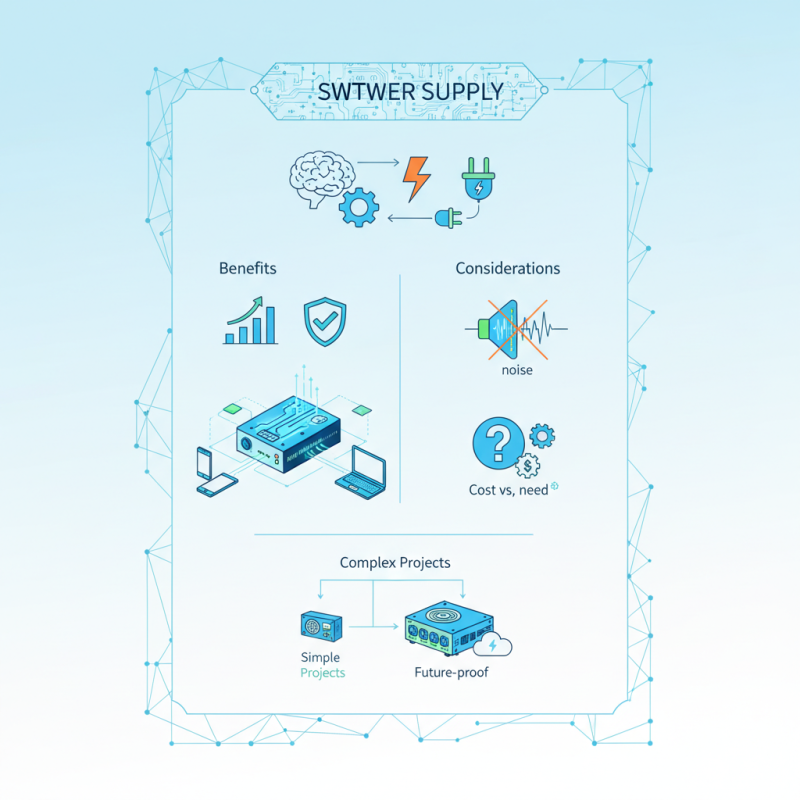
The design of an SPS offers versatility. They can handle various voltage levels and power requirements, making them ideal for diverse applications. However, not all SPS units are created equal. Some models can introduce electrical noise, which is detrimental in sensitive setups. This aspect calls for careful consideration when selecting an SPS.
Understanding your project's demands is vital. While SPS units are generally efficient, they can sometimes be overkill for simple tasks. Balancing power needs with cost and efficiency is a challenge. Therefore, selecting the right Switching Power Supply requires reflection on both your current and future needs.
Advantages of Switching Power Supplies Over Linear Power Supplies
Switching power supplies offer notable advantages over linear power supplies. They are smaller and lighter, making them ideal for compact electronics. Efficiency is a key factor. Switching supplies convert power with minimal heat loss, unlike linear types that waste energy as heat. This efficiency translates into longer battery life for portable devices and lower energy costs for operations.
Tips: When choosing a power supply, consider the wattage requirements of your device. Oversizing can lead to wasted energy.
Another benefit is voltage regulation. Switching supplies maintain output despite fluctuations in input voltage. Linear supplies struggle here, which can cause issues in sensitive applications. The design allows for more complex circuitry without significant performance loss.
Tips: Always check for overheating signs. Regular maintenance helps prevent performance degradation over time.
Some challenges exist with switching power supplies. They can introduce noise and may interfere with nearby components. It’s essential to assess your environment and ensure proper shielding. The upfront complexity in design may also deter some users. However, the long-term advantages often outweigh these concerns.
Efficiency Ratings of Switching Power Supplies in Modern Electronics
Switching power supplies have become essential in modern electronics due to their high efficiency ratings. They convert electrical power with minimal waste, improving overall system performance. This efficiency can dramatically reduce energy costs, especially in devices that operate continuously. When a power supply achieves up to 90% efficiency, it's an impressive feat. However, not all switching supplies are created equal. Some may fall short of their rated efficiency under certain loads, leading to unnecessary energy loss.
In practical applications, the design of a switching power supply is crucial. An inefficient design could lead to overheating. This condition not only affects performance but may shorten the lifespan of the device. It's essential to consider heat dissipation methods, which can impact efficiency ratings. Choosing a power supply with a proper thermal management system can help address this issue. Additionally, analyzing what efficiency rating you truly need can be a challenge. Higher efficiency models often come at a premium, so it requires careful cost-benefit consideration.
Cost-Effectiveness of Switching Power Supplies for High-Volume Production
Switching power supplies have gained significant traction due to their cost-effectiveness for high-volume production. According to a report by MarketsandMarkets, the global switching power supply market is projected to reach $30 billion by 2026. This growth reflects a rising demand across various sectors. Manufacturers are increasingly opting for these supplies to reduce costs while maintaining efficiency.
The initial investment in switching power supplies can be higher. However, their long-term benefits become apparent in high-volume production scenarios. They typically offer better energy efficiency, often exceeding 85%. This efficiency translates into lower energy bills and reduced heat generation, leading to less cooling and improved reliability. A study by Grand View Research indicated that energy-efficient power supplies could save companies up to 20% annually on energy costs.
However, challenges persist. Design complexities can arise, increasing the likelihood of errors. Engineers may need to invest more time in the development phase. It’s vital to remember these factors while considering switching power supplies. Balancing upfront costs against long-term savings is crucial in decision-making. High-volume production may justify the initial price, but careful examination of potential pitfalls must also be part of the strategy.
Applications of Switching Power Supplies in Consumer and Industrial Electronics
Switching power supplies are pivotal in both consumer and industrial electronics. These devices convert electrical power efficiently, making them ideal for various applications. In consumer electronics, switching power supplies are commonly found in phones, laptops, and home appliances. According to a report by Research and Markets, the global switching power supply market is projected to reach $50 billion by 2026, driven by increasing demand for portable electronics. Their compact size and lightweight nature suit modern lifestyles, where portability is key.
In industrial settings, switching power supplies play a crucial role in automation, robotics, and telecommunications. They ensure reliable power for machinery while minimizing energy waste. The International Energy Agency (IEA) reported that optimizing power supply efficiency could decrease energy consumption by up to 30%. Yet, problems like electromagnetic interference and thermal management often arise. Manufacturers must address these issues to ensure long-term reliability. Many systems still face challenges such as overheating. This calls for ongoing innovation and improvement in design and materials. Addressing these concerns is vital for the growth and efficiency of power supply applications across sectors.
Applications of Switching Power Supplies in Consumer and Industrial Electronics
Trends in Switching Power Supply Technology and Future Developments
Switching power supply technology has evolved rapidly in recent years. These supplies are crucial for modern electronics, offering efficiency and compact size. In the future, we can expect even more advancements. With the push for renewable energy, power supplies will need to adapt. This means integrating smarter control systems and better energy management.
Tips: Always consider the efficiency ratings when selecting a power supply. A higher rating means less energy waste. This can be crucial in battery-operated devices. Look for designs that minimize heat generation, as this enhances longevity.
Another trend is the rise of digital power management. This allows for real-time adjustments in power delivery. Devices can engage different voltage levels based on their needs. While promising, digital systems can introduce complexity. Not all designs might handle this gracefully, leading to possible failures.
Ultimately, as technology grows, so do the expectations. Users need power supplies that are not just efficient, but also reliable and adaptable. The journey is exciting but not without its challenges.
Why Choose a Switching Power Supply for Your Electronics Needs?
| Dimension | Description | Current Trends | Future Developments |
| Efficiency | High efficiency typically above 90%. | Emerging technologies improve efficiency ratings. | Enhancements in semiconductor materials and designs. |
| Size | Compact and lightweight designs for better integration. | Miniaturization of components is a key focus. | Development of ultra-compact units without efficiency loss. |
| Cost | Competitive pricing due to high production volumes. | Increased affordability driven by market competition. | Potential for lower costs with further technological advances. |
| Regulation | Stable output voltages across varying loads. | Strict regulations for voltage and ripple standards. | Innovations aiming at improving the transient response. |
| Application Range | Used in various electronics from small gadgets to industrial machines. | Expanding applications in renewable energy and automotive sectors. | Advancements to cater to next-gen electric vehicles and smart grids. |


