Top 10 Laser Machine Types for Global Buyers Understand Today
In today's competitive industrial landscape, understanding laser machines is crucial for global buyers. These machines are versatile tools used for cutting, engraving, and marking various materials. As technology advances, the range of types available has expanded significantly. Buyers face the challenge of selecting the right laser machine for their specific needs.
Every laser machine operates on unique principles and comes with distinct features. Some are more suited for precision work, while others excel in speed. It is essential to evaluate options like CO2 lasers, fiber lasers, and solid-state lasers. Each type has its strengths and potential drawbacks, which can impact overall performance.
Navigating the options can be overwhelming. Buyers must consider factors such as material compatibility and cost-effectiveness. Moreover, the importance of supplier reliability cannot be overstated. Trustworthy vendors provide not just the machines, but also the support necessary for successful operations. The world of laser machines is complex, yet understanding it opens doors to innovation and efficiency.
Overview of Laser Machine Technology in the Global Market
The laser machine market is evolving rapidly. As technology advances, diverse laser types are emerging. These machines are crucial in various industries, including manufacturing,
medical, and automotive. Their applications are broad and constantly expanding, driven by innovation.
Understanding laser machine technology is essential for global buyers. The most common types include CO2 lasers, fiber lasers,
and diode lasers. Each type serves different purposes, such as cutting, engraving, or marking. CO2 lasers are widely used for non-metal materials.
They excel in cutting wood or plastic. Fiber lasers, on the other hand, are ideal for metal work. Their efficiency is impressive, but they can be expensive for small operations.
Not all lasers are perfect for every task. Embracing new technology can be daunting. Some machines may lack user-friendly interfaces or require specialized training. Additionally, buyers often face challenges in selecting the right type.
It’s vital to assess the specific needs of a business before investing in laser technology. Making informed decisions can lead to significant returns and operational efficiency.
Key Features and Benefits of Different Types of Laser Machines
Laser machines have become indispensable across various industries. They offer precision, efficiency, and versatility. Understanding the key features and benefits of different types can greatly enhance a buyer's decision-making process.
Fiber lasers, for instance, are known for their high efficiency and low operational costs. According to a report by MarketsandMarkets, the demand for fiber laser technology is set to grow by over 20% annually. This growth is driven by their low maintenance requirements and ability to cut through various materials with precision. However, users often encounter challenges related to setup complexity and initial investment costs.
CO2 lasers are another popular choice. They excel in cutting and engraving non-metal materials. Their widespread use in industries such as signage and textiles highlights their effectiveness. However, users need to consider the limitations in speed compared to fiber lasers. Research indicates that while CO2 lasers are versatile, they require more frequent maintenance, leading to increased downtime.
For buyers, understanding these nuances is crucial. Each type of laser machine presents unique benefits and potential drawbacks. An informed choice can lead to enhanced productivity and profitability. Exploring these features helps buyers align their needs with machine capabilities.
Comparison of CO2, Fiber, and Solid-State Laser Machines
When comparing CO2, fiber, and solid-state laser machines, understanding their differences is crucial. CO2 lasers are versatile and widely used for cutting and engraving non-metal materials. They offer high precision and are cost-effective for many applications. However, they can be less efficient when working with metals.
Fiber lasers, on the other hand, excel in metal processing. They provide faster cutting speeds and higher efficiency with lower operating costs. Their compact design can save valuable workspace, but they may require a higher initial investment. Users should consider their specific needs when choosing between these two technologies.
Solid-state lasers combine the strengths of both CO2 and fiber lasers. They often produce higher quality beams and can handle a variety of materials. However, their complexity can lead to higher maintenance requirements. Carefully assess the long-term operational costs before making a decision.
Tips: Always evaluate your production needs before purchasing a laser machine. Test different materials to see which works best for your projects. Don't overlook the importance of reliable customer support when selecting equipment. Choose a machine that suits not only your budget but also your specific applications.
Applications and Industries Utilizing Laser Machines
Laser machines are transforming various industries today. Their applications range from manufacturing to healthcare. The versatility of laser technology makes it invaluable across sectors.
In manufacturing, lasers are used for cutting and engraving materials like metals, plastics, and wood. According to recent industry reports, over 60% of manufacturers rely on laser systems for precision tasks. This method increases efficiency and reduces waste. Yet, some users encounter challenges in achieving optimal settings for different materials. Continuous experimentation is often required to perfect the process.
Healthcare is another industry where lasers shine. They are utilized in surgeries and skin treatments. Reports indicate that the global medical laser market could reach $8.2 billion by 2025. Despite the benefits, some procedures lack comprehensive safety data. This raises questions about long-term effects on patients. Those in healthcare need to weigh the benefits against potential risks. This careful consideration is essential in advancing laser applications responsibly.
Top 10 Laser Machine Types for Global Buyers
Buying Considerations for Global Laser Machine Buyers
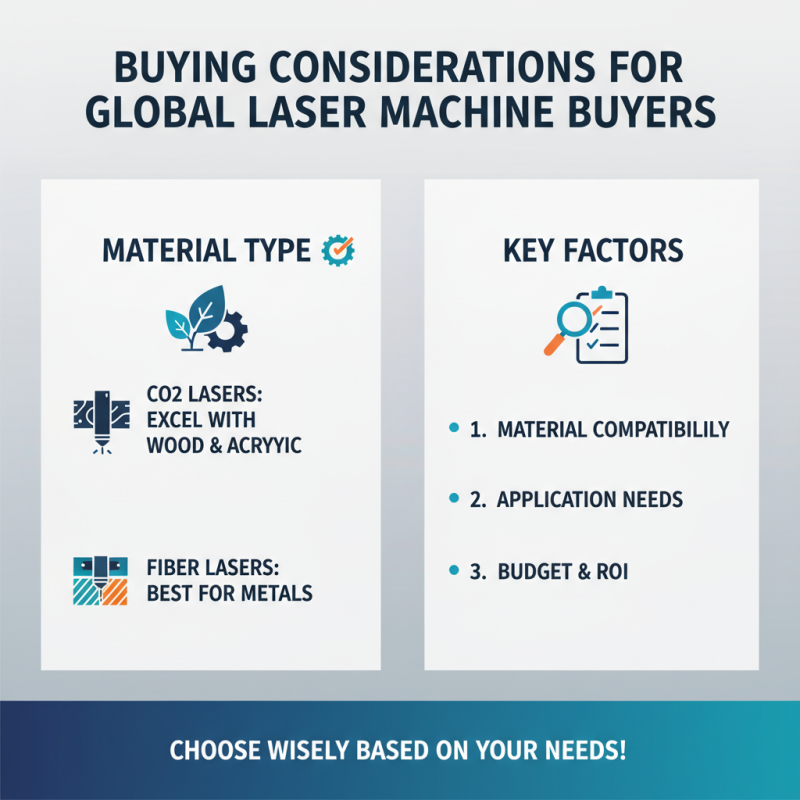
When considering the purchase of laser machines, buyers must focus on several key factors. The type of material you plan to work with is crucial. Different lasers excel with specific materials. For instance, CO2 lasers are great for wood and acrylic, while fiber lasers work best on metals. Understanding your material needs will guide your choice effectively.
Another important aspect is power and speed. Higher wattage generally means faster cutting or engraving speeds. But speed isn’t everything. A slower speed may allow for more detailed work in certain applications. Buyers should balance these factors based on project requirements. Budget also plays a significant role in the decision-making process. Sometimes, investing more upfront pays off with better quality and durability.
Finally, after-sale support and warranty terms are vital considerations. A machine is not just a purchase; it’s a long-term investment. Who will assist you if issues arise? Remember, the right choice today impacts performance tomorrow, and maintaining optimal productivity is essential for all buyers.